Context
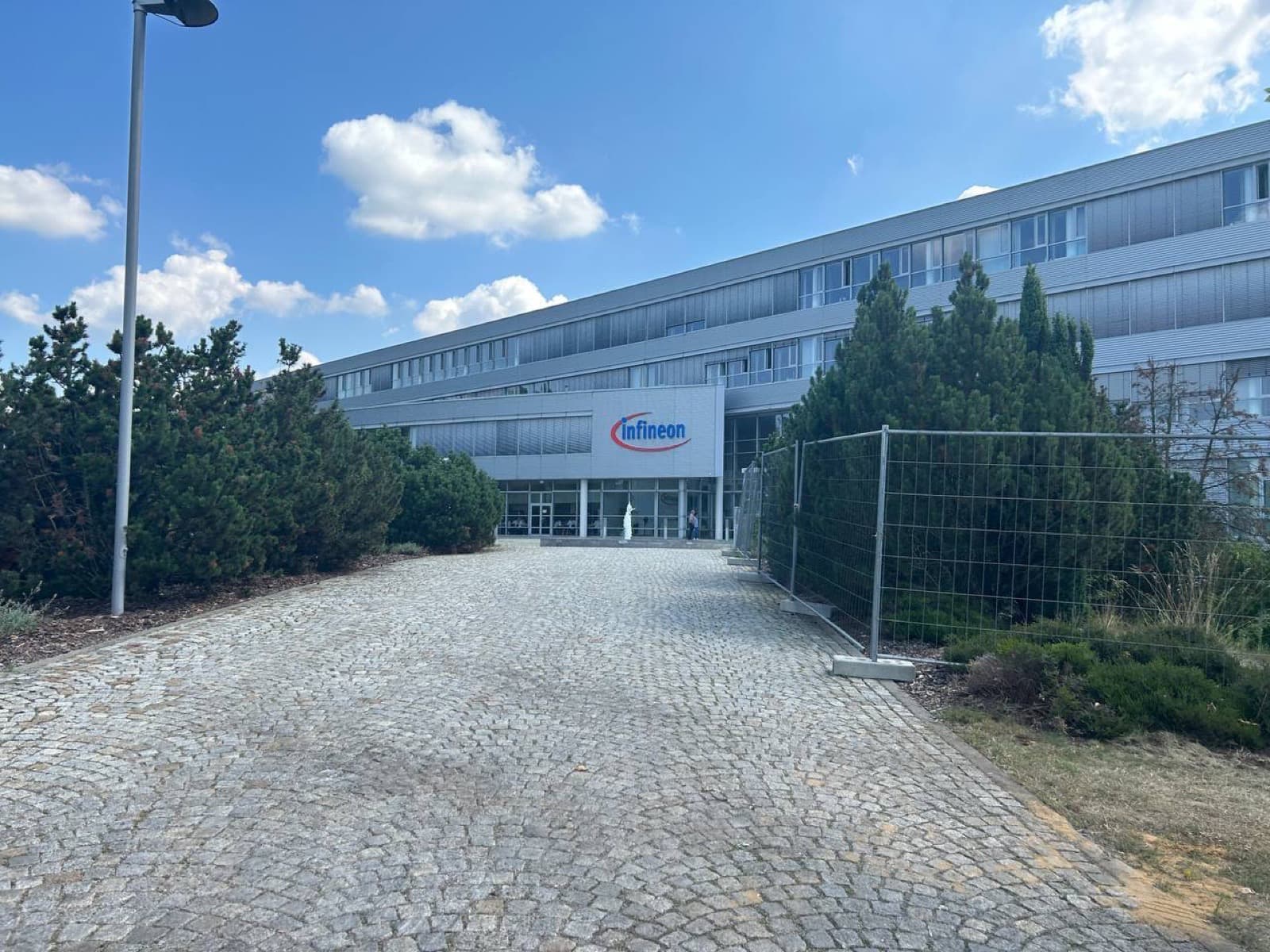
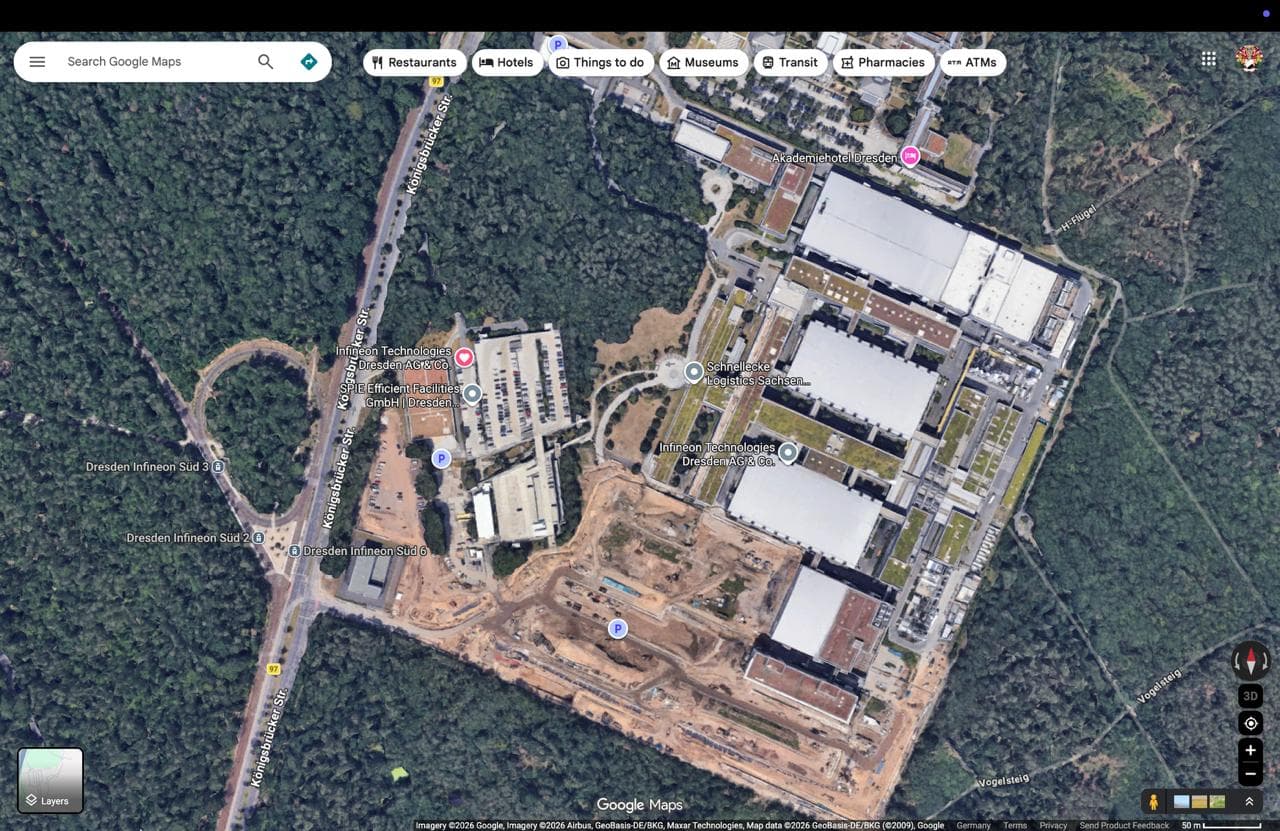
Infineon's Dresden campus has hundreds of parking spaces spread across several lots. Before this project, the company was evaluating commercial parking guidance vendors — the best offer was €480,000/year in licensing and maintenance fees.
The alternative: build it in-house.
What was built
A full parking guidance system, from hardware to dashboard:
- Embedded firmware in C running on IP cameras — performs ANPR (Automatic Number Plate Recognition) and occupancy counting without sending video streams over the network.
- Python microservices aggregate zone occupancy, handle authentication, and serve the REST/WebSocket API.
- C# device management layer handles camera provisioning, firmware updates, and health monitoring.
- React + TypeScript dashboard gives security staff and drivers a real-time map of available spaces.
Architecture
┌──────────────────┐ MQTT ┌────────────────────┐
│ IP Camera (C) │ ────────────► │ Python Backend │
│ ANPR + Count │ │ (Event Processor) │
└──────────────────┘ └────────┬───────────┘
│ WebSocket
┌────────▼───────────┐
│ React Dashboard │
│ (Real-time map) │
└────────────────────┘
Cameras run the detection locally (edge computing) — only occupancy events are sent over the network, not video. This keeps bandwidth low and avoids GDPR issues with centralized video storage.
Challenges
The embedded + web bridge. Writing C for resource-constrained cameras and then wiring it to a React SPA required designing a clean protocol boundary. MQTT was chosen over HTTP polling to keep latency under 500ms.
Graceful degradation. If a camera goes offline, the system doesn't show stale data — it marks the zone as "unknown" and the dashboard reflects uncertainty rather than lying.
Multi-tenant configuration. Different parking lots have different layouts. A configuration-as-data approach means adding a new lot is a JSON file, not a code change.
Outcome
The system went live on campus. €480,000/year saved vs. the vendor quote. The barrier control subsystem added independently serves 8,000 registered users with 3,000 monthly active.
What I'd do differently
The MQTT topic structure grew organically and became inconsistent across camera types. I'd define the topic schema upfront as a formal contract and version it from day one.